Micro-Interactions in E-Commerce: The Hidden Language of Trust

That Magic Moment
You have surely felt it while shopping online: you press "Add to Cart" and the product glides smoothly into the cart in the top right corner. Or you enter a coupon code and the screen does not freeze; the form gently expands and confirms "Coupon Applied".
We call this a micro-interaction. And in e-commerce, we know very well that these tiny touches are in fact huge engineering moves that directly affect your revenue.

30 SECOND SUMMARY
Success in e-commerce lies not in listing products but in reducing the user's perceived friction to zero. A product flying into the cart, an instant confirmation, forms that open like a feather (micro-interactions) build trust and lift sales. The secret: writing this motion as feather-light animated SVG and Next.js code, keeping 99 PageSpeed on desktop and 100 on mobile while giving the site an app-like fluidity.
The Hidden Language of Trust
At Hitit Media, we put Shopping at the very center of our web work and our vision. Because displaying a product online is easy; the real craft is reducing to zero the friction a user feels from adding the product to the cart all the way to completing payment.
On traditional, clunky e-commerce sites you press a button and the site seems to fall into deep thought. The page goes white, a loading spinner turns. Meanwhile a doubt forms in the user's mind: "Did the system crash? Will my card be charged twice?" In a modern architecture there is no room for such doubt. Micro-interactions bring the system to life.
Big Purchases Start With Small Details
What completes a purchase is often not the product itself, but the trust felt along the journey. Micro-interactions build that trust on three fronts.
- 01
Trust signal
A tiny confirmation that appears when payment succeeds delivers the "everything is under control" feeling within seconds.
→ Fewer abandoned carts
- 02
Digital satisfaction
The product-flying-to-cart animation creates a small sense of reward and encourages the user to keep shopping.
→ More items per cart
- 03
Zero friction
An interface that gives instant feedback stops the user from pausing to ask "what is happening?"
→ Checkout completes without interruption
Motion Is the Language of Memory
The human brain notices motion far faster than a static image, and remembers it far longer. This is a reflex tens of thousands of years old: a moving thing demands attention. The same rule holds in digital. A small movement at the right place and the right duration etches your brand into the user's mind.
The keyword here is the "right" duration. A good micro-interaction lasts between 200 and 400 milliseconds; the eye notices it but does not have to wait. Longer becomes annoying, shorter goes unnoticed. Think of motion as a language: speaking little and clearly is more memorable than speaking a lot but noisily.
Surprising With Small Touches
The most beloved interfaces make the user smile in small, unexpected moments. We call this micro-delight. A few examples:
- Product flying to cart: The item glides from where it was clicked toward the cart.
- Coupon confirmation: If the code is valid, the field turns green and gently shakes.
- Button states: The button pulses while "loading" and turns into a checkmark on success.
- Skeleton screens: Instead of a blank screen, a soft outline appears until content loads; the wait feels shorter.

Animated SVG: The Secret of Light, Smooth Motion
So what do we draw this motion with? The answer is often animated SVG. SVG (Scalable Vector Graphics) is a vector format drawn with mathematical paths instead of pixels. Its advantages are tailor-made for e-commerce:
- Feather-light: Most icons and animations are a few kilobytes; a drop in the ocean next to a GIF or video.
- Crisp on every screen: Being a vector, it never blurs, whether on a Retina display or a giant monitor.
- Comes alive with code: It moves smoothly with CSS and a little JavaScript; its colors can follow the theme.
Here is a live example. The entire "Add to Cart" interaction below is a single lightweight SVG, neither a video nor a heavy library:
The Animation Power of Next.js
Beautiful animation is easy; beautiful animation that stays fast is hard. This is exactly where the Next.js and React architecture steps in. It lets us run motion without loading it onto the page's back:
- 01
Server components (RSC)
Static parts render on the server; only the small JavaScript needed for interaction reaches the browser.
→ Less code, faster first load
- 02
Code-splitting
Animation libraries load only when needed, only on the page that needs them.
→ The homepage does not carry unused code
- 03
Hardware-accelerated motion
We write animations on transform and opacity, which the GPU loves; the page layout is not recalculated.
→ Smooth 60 FPS, no jank
The result is measurable: we deliver an interface full of motion while keeping 99 PageSpeed on desktop and 100 on mobile. You can measure your own site with our React Speed Test and Responsive Test tools.

The Leopard's Sharpness, the Code's Lightness
There is a critical engineering limit here: sweet animations must not weigh your site down. If an effect you add slows the site by milliseconds, that interaction is no longer "sweet" but a burden.
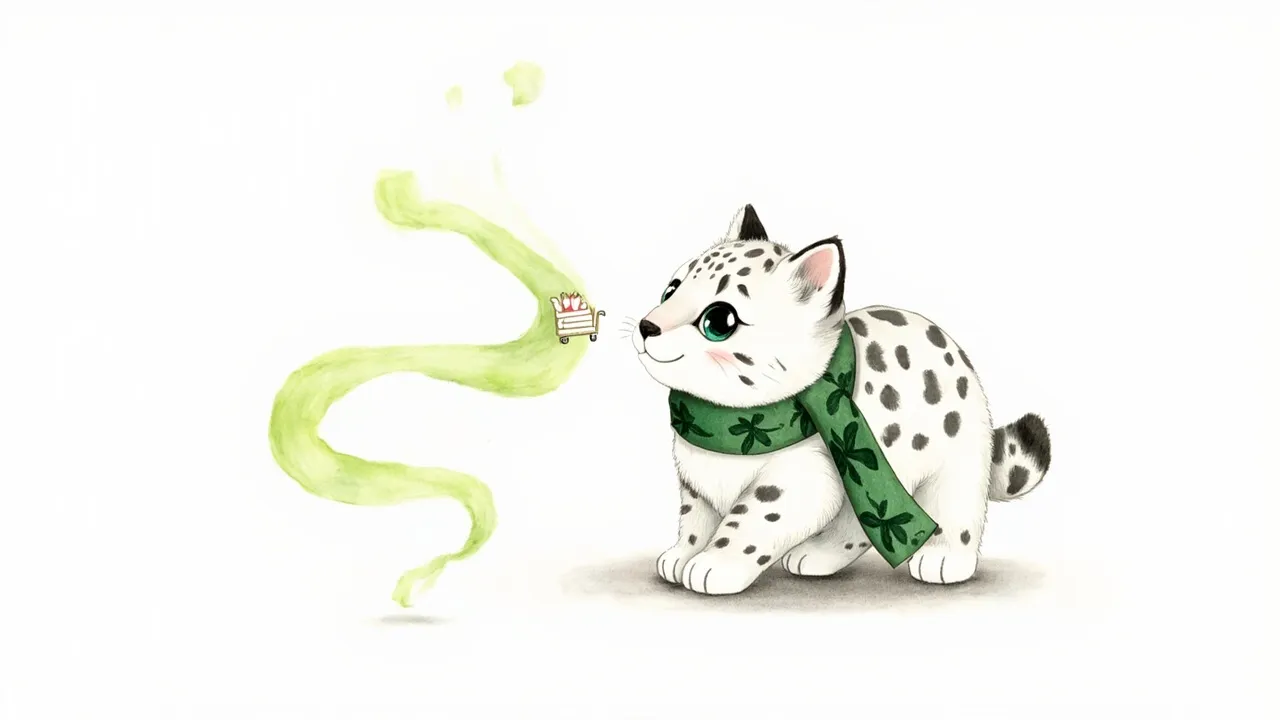
You have to act like our mascot, the Anatolian Leopard: quiet, making no wasted movement, analyzing the environment, and getting the most elegant and fastest result in a single move. We set a "performance budget" for every animation; no effect that exceeds the budget ships. We do not choose between beauty and speed, we hold both.
The Future of the Web: Fluid, App-Like Interfaces
The web is moving fast away from the classic "page reloads, white screen appears" era. Thanks to new browser technologies (such as View Transitions), transitions between pages become smooth and seamless, just like in a mobile app. Content does not vanish and reappear; it flows.
For e-commerce this is a revolution: moving from the product list to the product detail, the image seems to grow into place, and the cart slides open like a layer. The user feels they are browsing not a "website" but a living app. Brands that build the future web today will treat this fluidity as the standard.

Conclusion: Brands That Care About Details Win
Today consumers buy not only the product but also the experience they have while buying it. As we modernize your shopping infrastructure with Next.js engineering, the smart micro-interactions we sprinkle into the interface turn your brand from an ordinary catalog site into a living, trustworthy global brand.
Because we know that in e-commerce, great success is hidden in the smoothness of millisecond details. Let us strengthen your shopping experience together: get in touch with us.
Frequently Asked Questions
01What is a micro-interaction?
A micro-interaction is the instant visual feedback given to the user in small moments such as pressing a button, entering a coupon, or adding to cart. Used well, it builds trust and increases conversion in e-commerce.
02Do animations slow the site down?
If done wrong, yes. With the right approach (lightweight animated SVG, GPU-friendly transform/opacity animations, and Next.js code-splitting) a fluid experience can be delivered without slowing the page. Our target is 99 PageSpeed on desktop and 100 on mobile.
03Why is animated SVG preferred?
Because SVG is vector based, it is crisp on every screen, its file size is very small, and it can be animated smoothly with CSS/JavaScript. These traits make it far lighter and more flexible than GIF or video.
04How long should a good micro-interaction last?
Usually between 200 and 400 milliseconds is ideal. This is long enough to be noticed, yet short enough not to keep the user waiting.
05Can my existing e-commerce site get this experience?
Yes. By moving the infrastructure to a modern Next.js architecture and adding measured micro-interactions to the interface, an existing store can be given app-like fluidity. Get in touch with us for details.