What Is AI Optimization (AIO)? Our Precision in Web Design
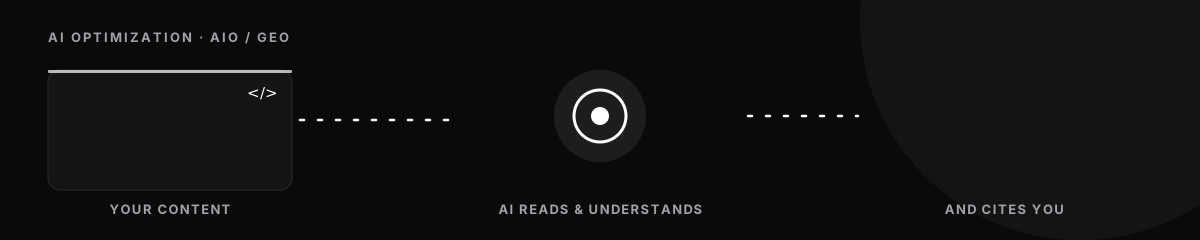
This article explains the general principles behind our Web Design work.
AI Optimization (AIO), what is it? The shortest answer: preparing your content so that answer-generating AI engines can read, understand and cite it. Today a website is read not only by people but also by engines like ChatGPT, Gemini, Claude and Perplexity. We build every project so that both audiences can understand and trust you with ease.
Classic SEO lifts you to the top of Google; AIO carries you inside the answer the AI gives. They are not rivals but complements, built on the same solid web design foundation. In this article we explain our AIO precision and the steps we take, in plain language.
Our AI Optimization (AIO) Precision in Our Web Design Work
At every stage of our web design process, we take concrete steps to make sure your content is read correctly and conveyed accurately by AI engines. The five core pillars of our precision:
Cloudflare AI Access
We deliberately open access for GPTBot, ClaudeBot, PerplexityBot and Google-Extended crawlers.
Many sites throttle bot traffic and unknowingly block AI too; we guarantee your content can be read.
Rich Semantic Markup
schema.org / JSON-LD, semantic HTML5, an orderly heading hierarchy and descriptive metadata.
A model understands what your page is, instead of guessing.
llms.txt
We add an llms.txt file at your site root that tells AI systems which content matters most.
Engines interpret your content more accurately; the pages you want surfaced become clear.
Clear, Unambiguous Language
Short sentences, direct statements and clear definitions; no room for ambiguity or double meaning.
An AI cites the information that is expressed most clearly.
AIO Testing on the Finished Site
When a project is complete, we test the content end to end on the live site.
We measure visibility and accurate citation across ChatGPT, Gemini, Claude and Perplexity, and refine if needed.
AIO comes as standard
At Hitit Medya, AI optimization is not a bolt-on package. AI crawler access, structured data, llms.txt and clear content language are part of standard delivery on every project. That way your site speaks with the same clarity to both people and the AI systems that guide them.
- AI crawler access (Cloudflare)
- schema.org / JSON-LD structured data
- llms.txt and semantic HTML
Tested on 4 engines: We probe your content across ChatGPT, Gemini, Claude and Perplexity to make sure you appear correctly in their answers.
What Is AIO?
AI Optimization (AIO), also known in the international literature as GEO (Generative Engine Optimization), is the discipline of preparing your content so that generative AI engines like ChatGPT, Gemini, Claude and Perplexity can read it, understand it and cite it as a source in their answers.
In classic SEO, the goal is to rank at the top of Google and have the user click a link. In AIO, the user often clicks no link at all: they ask the AI directly, and the AI produces a single answer. Research shows that a growing share of searches end this way, without a click. Having your brand named inside that answer turns you from an ordinary search result into a trusted recommendation.
For content to be readable by AI, four conditions must be met:
- Access: AI crawlers must be able to reach the content.
- Structure: Structured data and semantic tags must clarify the context.
- Language: Statements must be clear, direct and consistent.
- Authority: The information must be trustworthy, current and evidence-based.
At Hitit Medya we build web design to meet these four conditions from the very start. The ecosystem below sums up how your content is read by AI engines and turned into a recommendation:
AI Search by the Numbers
Search behaviour is changing: users increasingly get an answer straight from an AI instead of clicking a link. The figures below show why AIO is no longer something to postpone.
~60%
of Google searches end without a click (zero-click).
SparkToro / Similarweb 2024
800M+
weekly active users of ChatGPT.
OpenAI 2025
+40%
visibility gain in AI answers from structured data, lists and statistics.
GEO research
4
major generative engines read your content: ChatGPT, Gemini, Claude, Perplexity.
Hitit Medya AIO test
Create your llms.txt file in seconds
The first step toward AI optimization is content that is readable and clear. Measure your site's AIO and SEO readiness instantly with our free tools.
All tools are free, no signup or credit card required.
Academic and Technical References
FAQ: AI Optimization
The most common questions about AI Optimization (AIO). Every answer reflects Hitit Medya's real web design process and delivery standards.
01What is AI Optimization (AIO)?
AIO (AI Optimization), also known as GEO, is the discipline of preparing your content so that generative AI engines like ChatGPT, Gemini, Claude and Perplexity can read, understand and cite it in their answers. The goal is for your brand to appear as a trusted recommendation in AI responses.
02What is the difference between AIO and SEO?
SEO aims to rank your website at the top of search engines like Google, and the user clicks a link. AIO instead carries your content into the answers AI systems generate directly; the user often hears about your brand without clicking any link.
03What does Hitit Medya do for AIO in web design projects?
We open AI crawler access through Cloudflare, add schema.org/JSON-LD structured data and semantic tags to every page, place an llms.txt file on the site, write content in clear and direct language, and once the project is finished we run AIO tests on the live site across ChatGPT, Gemini, Claude and Perplexity.
04What is llms.txt and why is it needed?
llms.txt is a text file placed at your site's root that summarizes for AI systems which content is important and how it should be interpreted. It helps AI engines understand your content more accurately.