What Is Web Design? Golden Rules for Successful Web Design in 2026

What is web design? The shortest answer: the digital storefront that turns visitors into customers. When someone lands on your site, they decide within the first few seconds whether to stay or leave; great web design is what earns their trust in that moment, sparks curiosity and sets you apart from competitors. So it is not simply "making a pretty website," as many agencies would have you believe.
At Hitit Medya, we have believed one thing since 1999: your website is your company's digital identity. It generates customers, builds trust and opens your brand to the world. That is why we treat web design as the central hub; SEO, Google Ads, social media and content marketing all share a single goal: to strengthen your website and reach the right audience. This guide covers web design in its technical, historical and strategic dimensions, in plain language.
Web Design Through Hitit Medya's Eyes: A Stance, A Philosophy
Having delivered over 200 projects since 1999, what we've learned is crystal clear: web design is not an aesthetic preference, it is a strategic decision. We build this philosophy on five core principles:
- Generates Customers: A great website is not a passive storefront, it's an active sales machine. When SEO-compliant architecture, fast loading, and intuitive UX come together, organic customer flow begins naturally.
- Reflects Corporate Identity: Through color palette, typography, and photography choices, every pixel tells your brand's personality. Generic templates can never speak this unique language.
- Proof of Mission and Vision: Your website is the most powerful digital answer to the question "Who are we?" Research shows visitors decide "I can trust this company" within the first 3 seconds.
- Art + Engineering: A beautiful but slow site holds you back; a fast but ugly site drives customers away. We build both simultaneously. Hitit Medya's PageSpeed 99/100 score is concrete proof of this.
- Gateway to the World: With modern web technologies, a business anywhere can connect with customers in London or Dubai. Geography is no longer a barrier, merely a coordinate.
The digital marketing symbiosis: Google Ads drives traffic to your site; technical SEO and content strategy earn lasting positions in organic rankings; social media builds brand awareness. These channels are not isolated services, they form a symbiotic ecosystem whose intersection is always your web design. Ad spend evaporates on a weak site; organic traffic fails to convert on poor UX. Hitit Medya starts every project with this holistic view, uniting all channels under a single web design strategy, not the fragmented agency approach.
Every customer who commissions professional web design from Hitit Medya receives $300 in Google Ads credit applied directly to their account.
Google Ads is one of the world's most effective digital advertising platforms, across Search, YouTube and the Display Network. Like organic SEO, its ultimate goal is to drive traffic to your website and generate conversions, when both work together on a strong web design, the impact multiplies.
- Introductory SEO work included
- Campaign setup support
- Conversion-optimised landing page alignment
Full technical SEO: by default
At Hitit Medya, web design is not just interface work. Semantic HTML, schema.org markup, meta tag architecture, XML sitemap and Google Search Console setup are standard deliverables on every project. Organic rankings built through technical SEO provide continuous, cost-free access to your target audience, paid and organic channels work symbiotically on a strong web design foundation.
- On-page and technical SEO foundation
- Core Web Vitals optimisation
- Mobile-first indexing compliance
90+ page speed: achieving a Google PageSpeed Insights score of 90 or above is one of our top priorities. Beautiful design that loads slowly cannot rank.
What Is Web Design? Technical and Academic Definition
According to W3C, the architect of the World Wide Web, web design is a multi-disciplinary field encompassing user interface (UI), user experience (UX), visual hierarchy, accessibility (WCAG), and content architecture. Mozilla Developer Network (MDN) defines it more plainly as "the planning and execution of everything a user sees in their browser."
The academic foundations of this discipline are shaped by institutions such as ISTUN, METU, Stanford HCI and MIT CSAIL; technical standards are defined by W3C and MDN, all sources are compiled in a single reference list below. From Hitit Medya's perspective, web design goes beyond this technical definition: it is the command centre of digital marketing, whatever the discipline, the ultimate goal is always a website that reaches your audience, converts and grows stronger in organic rankings.
From the Birth of the Web to Today: Historical Evolution
From 1991 to 2026: 35 years of web design transformation, each milestone standing on the shoulders of the last.
Tim Berners-Lee publishes the first website
→ Text only, zero visuals. But the foundation of the internet was laid.
HTML 2.0 and table-based layouts
→ First visual design experiments, tables used for both data and layout.
CSS 1.0 standard published (W3C)
→ Content and style finally separate; web design truly begins.
WordPress launches, Adobe Flash at peak
→ Animation explosion arrives. Visual richness comes in; accessibility falls to zero.
iPhone launch, the mobile web era begins
→ Steve Jobs rejects Flash. Responsive design becomes non-negotiable.
HTML5 + CSS3 standards
→ Flash's end arrives; the semantic, open and accessible web era begins.
Flat Design trend (mainstream with iOS 7)
→ Shadows and gradients disappear. Simplicity, whitespace and typography take center stage.
Google Mobile-First indexing announcement
→ Mobile compatibility becomes a direct SEO ranking factor. The rules of the game change.
Core Web Vitals metrics defined
→ Speed, interactivity, visual stability measured numerically. Performance = rankings.
Next.js 13 App Router + React Server Components
→ Server and client unite. SEO + performance + DX perfected simultaneously. Hitit Medya adopts this architecture as standard.
Figma AI, v0 by Vercel, GitHub Copilot
→ AI multiplies design speed 10x. Strategic thinking and originality now outweigh technical knowledge alone.
The 7 Core Components of Professional Web Design
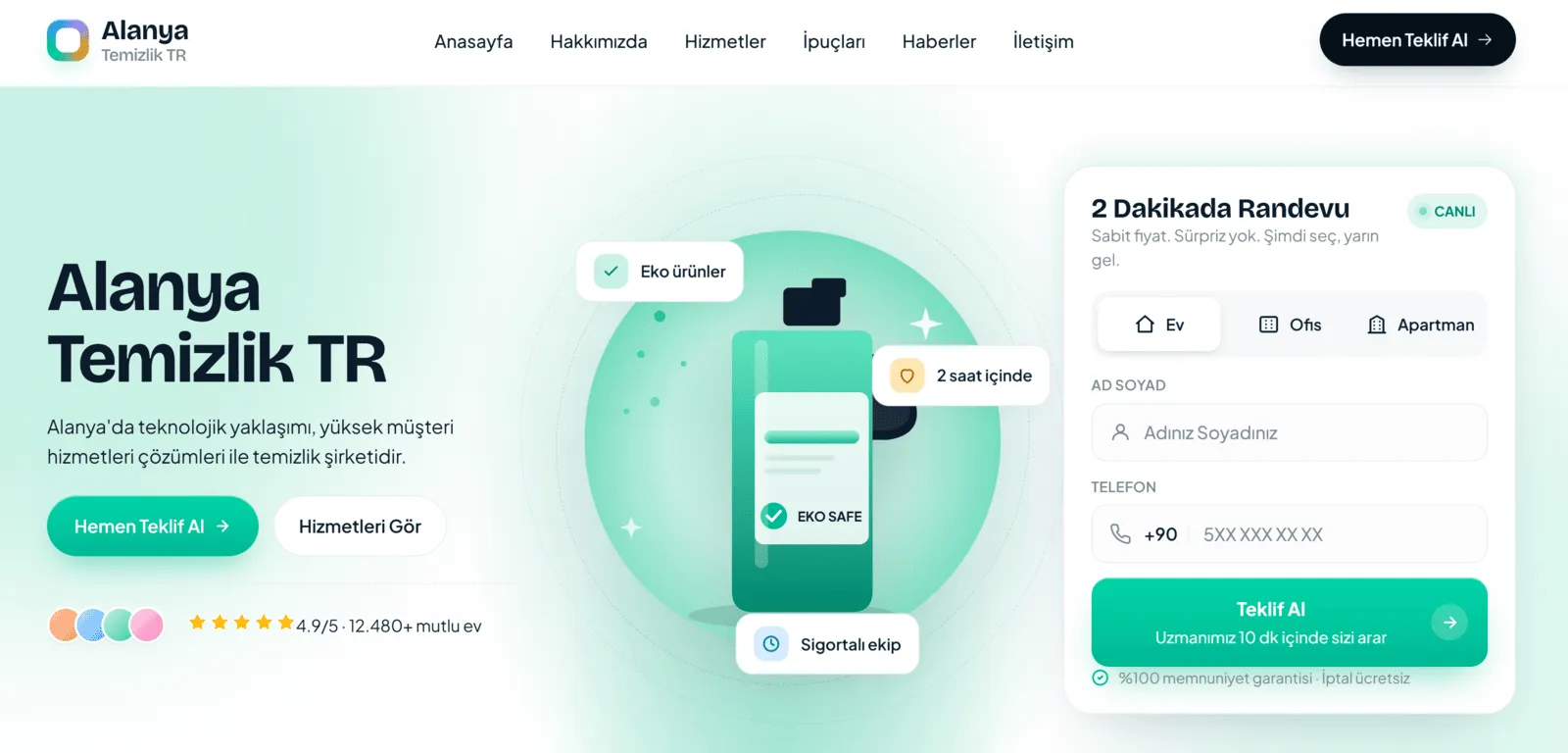
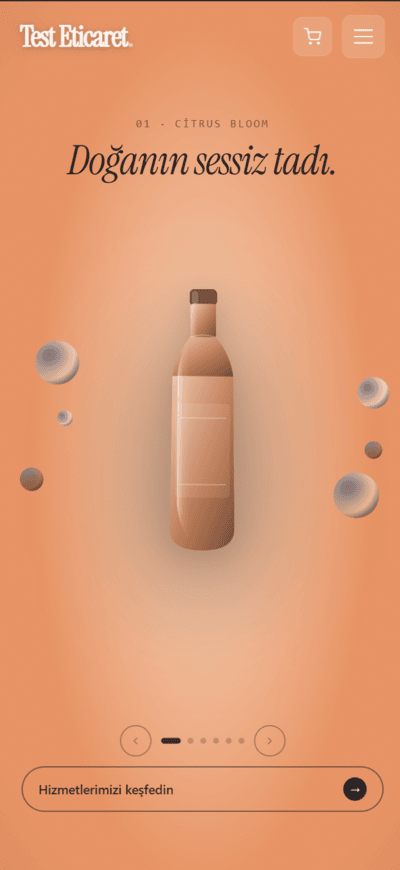
Seven disciplines converge in every project we ship, from the first pixel to the last line of code. Below, two real Hitit Medya projects show how desktop conversion design and mobile commerce experiences differ, yet follow the same strategic logic.
On small screens every pixel must earn its place, product, typography and navigation compete for thumb reach.
- Vertical hierarchy: product hero, brand story, then action
- Thumb-zone CTAs: primary actions within one-handed reach
- Typographic scale: display type and readable body on narrow viewports
UI User Interface
Color system, typography, button and layout design.
Creates aesthetic trust in the first 50 milliseconds.
UX User Experience
Navigation flow, ease of use, satisfaction.
Good UX can increase conversion rates by up to 200%.
Frontend Development
Living code with HTML, CSS, JavaScript and React.
Translates design into working, accessible reality.
Backend & API
Data management, security, server logic.
Dynamic content and scalable infrastructure.
SEO Architecture
Semantic HTML, meta tag system, schema.org.
Organic ranking positions, continuous access to your target audience; the ultimate destination of all digital marketing.
Performance Optimization
Core Web Vitals, lazy load, image optimization.
Every 1 second delay means 7% conversion loss.
Security Layer
HTTPS, CSP headers, XSS protection.
User trust, legal compliance and GDPR readiness.
Accessibility a11y
WCAG 2.1, screen reader support, keyboard navigation.
Equal access for every user; legal compliance and broader reach.
The Web Design Process: 6 Professional Phases
At Hitit Medya, every project places your website at the centre of the digital ecosystem. SEO, advertising and content only make sense on top of strong web design. The process is predictable and transparent:
- Discovery: Target audience analysis, competitive mapping, user personas and business goals are defined. The question "who are we designing for, and why?" is answered.
- Wireframe & Information Architecture: Content hierarchy, page structure and user flow, the skeleton is built before any pixels appear. Drawn iteratively in Figma and approved.
- Visual Design: Brand color system, typography hierarchy, iconography and component library are created. Every element carries your brand's voice.
- Development: Pixel-perfect coding with Next.js + React + TypeScript. Responsive, accessible (WCAG 2.1), fast.
- Testing & QA: 14 different devices, 4 major browsers, Google PageSpeed analysis, WCAG accessibility audit and cross-browser tests are completed.
- Launch & Growth Monitoring: Deploy on Vercel or a dedicated server, Google Search Console setup and 90-day performance tracking.
How Artificial Intelligence Is Transforming Web Design
Between 2024–2026, AI fundamentally reshaped web design processes. This transformation did not eliminate experienced designers and developers, on the contrary, it made them more strategic and valuable.
Automatic layout suggestions and style consistency audit.
Brand-aligned decision making and final approval.
Generates complete React UI code from text descriptions.
Business logic analysis and reading client needs.
Concept visuals and mood boards in seconds.
Brand originality and cultural alignment decisions.
Code completion, refactoring and debugging suggestions.
Architectural decisions, security and performance optimization.
Custom content and interface for each user.
Ethical use, data privacy and brand integrity management.
Hitit Medya's stance: We position AI as an assistant and speed catalyst. But the promise made to the client, original brand identity and long-term strategy always remain under human oversight.
Why Professional Web Design? Proven in Numbers
Organic rankings and paid traffic share the same goal: reaching your target audience. Research confirms what we see in every project, web design directly affects trust, speed, conversion and revenue; top positions in organic search are the foundation of sustainable customer flow.
94%
of users make their first trust decision based on design alone.
Stanford Credibility Lab
+8.4%
conversion lift from a 0.1s mobile speed improvement.
Google / Deloitte
63%
of global web traffic comes from mobile devices.
Statista 2025
100:1
potential ROI on UX investment, the highest-return digital spend.
Forrester Research
53%
of clicks go to the #1 Google result; position #10 gets only 2.5%.
Advanced Web Ranking
88%
won't return to a site after a poor user experience.
Gomez / Amazon
Is your site live? Test it now with our 4 tools
At Hitit Medya we don't just talk about web design, we measure it. Enter your live URL and see technical SEO, design quality, mobile compatibility and trust signals in seconds.
All tools are free: no signup or credit card required.
Academic and Technical Reference Resources
Conclusion: Web Design Is Not a Service, It's a Strategic Investment
Web design is not just "spending money on a website", it is the smartest, most measurable investment in your brand's digital future. Since 1999, at Hitit Medya we approach every project by asking "how does this company grow, how does it reach more customers?" For us, web design is the central hub: from Google Ads to organic SEO, social media to content marketing, every digital channel exists symbiotically to strengthen your site.
This discipline, which unites art and engineering, is the only lasting digital asset that can deliver your brand, mission and vision to your target audience, visible in organic rankings, reachable from every corner of the world.
If you're ready to take your brand to the digital stage it deserves:
- Get in touch with us. Let's evaluate your project together and map out a custom roadmap.
- Explore our solutions. Which technology and approach is right for you?
Hitit Medya. Powered by Heritage, Designing the Future.
FAQ: Web Design
We share what we've learned from web design projects since 1999 through the questions our clients ask most. Every answer reflects Hitit Medya's real processes, technology and delivery standards, not generic agency clichés.
01What is web design according to Hitit Medya, and why is it the central hub of digital marketing?
Web design is not simply producing a visual interface, it is building your brand's strategic command centre in the digital world. At Hitit Medya this discipline unites eight components: UI, UX, frontend, backend, SEO architecture, performance optimisation, security and accessibility.
We position web design as the central hub because:
- Google Ads traffic ultimately lands on your site, a weak landing page burns ad budget.
- Technical SEO and content strategy earn lasting positions in organic rankings, providing cost-free access to your audience.
- Social media builds brand awareness, but conversion mostly happens on your website.
02What is the difference between professional web design and a ready-made WordPress template?
Ready-made templates offer low upfront cost but fail to deliver original brand language, 90+ PageSpeed targets, semantic SEO infrastructure and scalable architecture long term. Professional web design ensures every pixel carries your brand's voice.
| Criteria | Ready Template | Hitit Medya Web Design |
|---|---|---|
| Brand originality | Limited customisation | Custom UI/UX and component library from scratch |
| PageSpeed target | Typically 40–70 | 90+ mobile and desktop |
| SEO foundation | Plugin-dependent | Semantic HTML, schema.org, sitemap, standard |
| Technology | PHP / monolithic theme | Next.js + React + TypeScript |
| Scalability | Slows under traffic spikes | Vercel Edge / serverless scaling |
According to Stanford Credibility Lab, 94% of users make their first trust decision based on design alone. Ready templates rarely pass this threshold.
03What technologies does Hitit Medya use in web design projects?
Hitit Medya has adopted the Next.js App Router and React Server Components architecture as standard for all new web design projects since 2022. This stack optimises SEO, performance and developer efficiency simultaneously.
- Frontend: React, TypeScript, Tailwind CSS, accessible (WCAG 2.1) components
- Rendering: SSR, SSG and ISR, hybrid render per page type
- Infrastructure: Vercel Edge Network; dedicated servers when required
- SEO: Metadata API, JSON-LD schema, XML sitemap, Search Console setup
- Performance: next/image WebP/AVIF, code splitting, Core Web Vitals optimisation
For projects requiring Headless WordPress or custom CMS, content management is decoupled from the frontend for security and speed. Next.js Web Design →
04How are web design prices determined?
Web design pricing is not a single list price, every project is scoped to your business goals. At Hitit Medya the quoting process is transparent; no hidden costs or post-launch \"SEO packages\".
Key factors affecting price:
- Page and section scope: a 5-page corporate site vs. a 50-page multilingual e-commerce platform.
- Custom features: payment integration, CRM/ERP connection, multilingual, membership systems.
- Design complexity: custom animation, 3D visuals, interactive configurators.
- Content production: copy, photography, video included or not.
- Post-launch support: maintenance, SEO monitoring, Google Ads management.
Every Hitit Medya web design project includes technical SEO, a 90+ PageSpeed target and $300 Google Ads credit: standard deliverables, not optional extras.
05How long does the web design process take at Hitit Medya?
Every project passes through 6 professional phases; duration depends on scope and approval speed:
- Corporate website (5–12 pages): typically 6–10 weeks
- E-commerce or multilingual project: 10–16 weeks
- Landing page / campaign site: 3–5 weeks
Our 6-phase process:
- Discovery: audience, competition, persona analysis (1–2 weeks)
- Wireframe & information architecture: Figma skeleton, approval (1–2 weeks)
- Visual design: brand system, component library (2–3 weeks)
- Development: Next.js pixel-perfect coding (2–4 weeks)
- Testing & QA: 14 devices, 4 browsers, PageSpeed, WCAG (1 week)
- Launch & monitoring: deploy, Search Console, 90-day performance tracking
06How is SEO integrated into web design?
At Hitit Medya, SEO is integrated from start to finish: not bolted on after the project ends.
Technical SEO (standard delivery):
- Semantic HTML5 structure (H1–H6 hierarchy, landmark elements)
- Meta tag architecture and Open Graph tags
- schema.org JSON-LD (Organization, WebSite, BreadcrumbList, FAQPage)
- XML sitemap and robots.txt configuration
- Google Search Console and Analytics 4 setup
- Core Web Vitals optimisation (LCP, INP, CLS)
- Mobile-first indexing compliance
Organic rankings provide continuous, cost-free access to your target audience. Combined with Google Ads on a strong web design foundation, impact multiplies: paid traffic delivers immediate results, organic traffic reduces long-term cost.
Measure your SEO performance with our free SEO Analysis tool.
07How does the $300 Google Ads credit work for web design clients?
Every client who commissions professional web design from Hitit Medya receives $300 in Google Ads credit applied to their account. This is a concrete part of our symbiotic digital marketing ecosystem: your site is built as a conversion engine, Google Ads reaches your audience instantly.
What's included:
- Introductory SEO work
- Campaign setup support: Search, Display, YouTube
- Conversion-optimised landing page alignment: consistent site and ad messaging
When Google Ads traffic meets strong UX and fast loading, Quality Score rises and cost-per-click falls. Your web design investment directly improves ad efficiency too.
08Why is mobile compatibility critical in web design?
Approximately 63% of global web traffic comes from mobile devices (Statista 2025). Google uses mobile-first indexing: ranking priority goes to your mobile experience.
Hitit Medya mobile-first web design approach:
- Vertical hierarchy: product hero, brand story, then CTA
- Thumb-zone CTAs: primary actions within one-handed reach
- Typographic scale: readable body text on narrow viewports
- QA across 14 devices: foldables, tablets, high-DPI screens included
A 0.1-second mobile speed improvement delivers 8.4% conversion lift (Google / Deloitte). A slow or broken mobile experience also hurts organic rankings.
Check your site across devices instantly with our Responsive View Test tool.
09Which businesses is corporate web design suitable for?
Corporate web design suits businesses of every scale that want professional digital positioning, trust building and measurable customer flow.
Sectors Hitit Medya works with intensively:
- Export and B2B: multilingual structure, international SEO, trust signals
- Service sector: lead forms, local SEO, conversion-focused layout
- E-commerce: vertical mobile layout, fast checkout, product SEO
- Health tourism: multilingual, trust and accreditation emphasis
- SMEs and manufacturing: catalogues, technical documentation, ERP integration
We've delivered 200+ projects since 1999. From conversion-focused corporate sites like Alanya Temizlik TR to mobile commerce experiences, the same strategic logic applies: web design at the centre, all channels symbiotic.
10Is technical support provided after project delivery?
Yes. Hitit Medya doesn't stop at one-off delivery. Post-launch:
- 90-day performance monitoring: PageSpeed, Search Console, conversion metrics
- Technical support: security patches, content updates, bug fixes
- SEO growth consulting: organic ranking tracking and content recommendations
- Google Ads optimisation: campaign efficiency via the Türk SEM ecosystem
Long term, your website continues strengthening as the lasting centre of your digital ecosystem. New features, language versions or e-commerce modules can be added modularly on the existing Next.js infrastructure, no need to start from scratch.